Wednesday, April 7, 2010

Waiting on Wednesday: Faithful Place

This week's pre-publication "can't-wait-to-read" selection is:

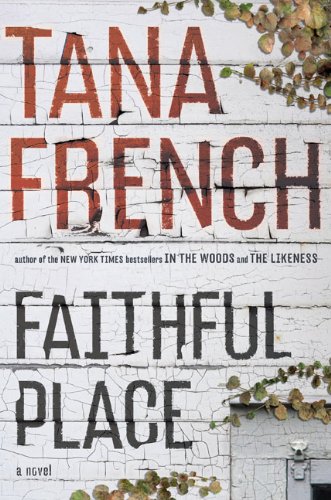
book cover of Faithful Place by Tana French

An Irish undercover cop delves into his working-class past. When Frank Mackey left Faithful Place more than 20 years ago, he never imagined returning. Of course, he thought he'd be leaving with his childhood sweetheart Rosie Daly. When Rosie failed to show up at their meeting spot that fateful night, Frank was broken-hearted but decided to go it alone. He's moved on and hasn't looked back--until he receives an urgent call from his sister Jackie, demanding that he return to his childhood home. She's got the one thing in the world that could make him come back: information about Rosie, whose suitcase has been found in a vacant house. This new intelligence throws mysterious shadows on Frank's theories about Rosie's fate. Suddenly, what was once buried history starts coming to light, and Frank isn't quite prepared for the twists his life begins to take.
This title will be released on July 13, 2010.

What are you waiting on this week? Leave your link here.

~Waiting on Wednesday is a weekly event hosted by Jill at Breaking the Spine~

Tuesday, April 6, 2010

All Things Kid Lit: Big Red Lollipop

Picture Book Pick of the Week:

Big Red Lollipop by Rukhsana Khan book cover

Big Red Lollipop
by Rukhsana Khan
illustrated by Sophie Blackall

Rubina is excited to be invited to her first birthday party—until her mother insists that she bring her younger sister Sana, too. “They don’t do that here! They’ll laugh at me!” Rubina begs and pleads, to no avail. What will it take for her mother—and Sana—to see things her way?


You Might Also Like:


Links of Interest:


New York Times
April 02, 2010

It took a surprisingly long time for bad parents to show up in children's books. Did you ever notice how few there are, compared with, say, the self-centered and murderous parents in Greek mythology or the Bible? In American literature, children's and adult books didn't sharply diverge as categories until the 20th century, so it's not clear whether we should even include that mean, kidnapping drunk, Pap Finn.


School Library Journal
April 02, 2010

For teachers and students looking to spice up their verse, Kidlitosphere.com has tagged a variety of sites and activities in honor of National Poetry Month this April. "In the past everyone has done their own thing," says author and poet Irene Latham, who is spearheading the effort to let educators and kids know about the new site. "This year we want to share together, and we hope the whole world will come."


Monday, April 5, 2010

Books By Theme: My favorite poets...


In honor of National Poetry Month, I thought I'd share some of my favorite poets' best lines (in my humble opinion)...


Fondly I ponder You all:
without you I couldn't have managed
even my weakest of lines.
- from "A Thanksgiving"


yours is the light by which my spirit's born:
yours is the darkness of my soul's return
-you are my sun,my moon,and all my stars


There is so much silence between the words,
you say. You say, The sensed absence
of God and the sensed presence
amount to much the same thing,
only in reverse.
You say, I have too much white clothing.
You start to hum.
Several hundred years ago
this could have been mysticism
or heresy. It isn't now.
Outside there are sirens.
Someone's been run over.
The century grinds on.
-from "In the secular night"


...the portait show seems to have no faces in it at all, just
paint
you suddenly wonder why in the world anyone ever did them
I look
at you and I would rather look at you than all the portraits in 
the world...
-from "Having a Coke with you"


Who are your favorite poets?

Sunday, April 4, 2010

The Monstrosity Gazette: A weekly smattering of all things literary...


Quote of the Week

Perhaps no place in any community is so totally democratic as the town library. The only entrance requirement is interest. 

—Lady Bird Johnson


Today in Literary History...


On this day in 1928 Maya Angelou was born in St. Louis, as Marguerite Johnson. Angelou has said that her remarkable and varied life -- prostitute, dancer, actor, writer, activist, educator, academic -- has been made possible by a "remedy of hope" made from reading, courage, and "insouciance."

For more literary history, visit Today in Literature.


Bookish Photo Love:


Book on my Radar:


Life in Year One: What the World Was Like in First-Century Palestine
By Scott Korb
Hardcover, 256 pages
Riverhead

Summary in a Sentence: 

A generally historical, fun look at life during the time of Jesus.

~ Check out this interview with Scott Korb on Diana Joseph's blog.

Saturday, April 3, 2010

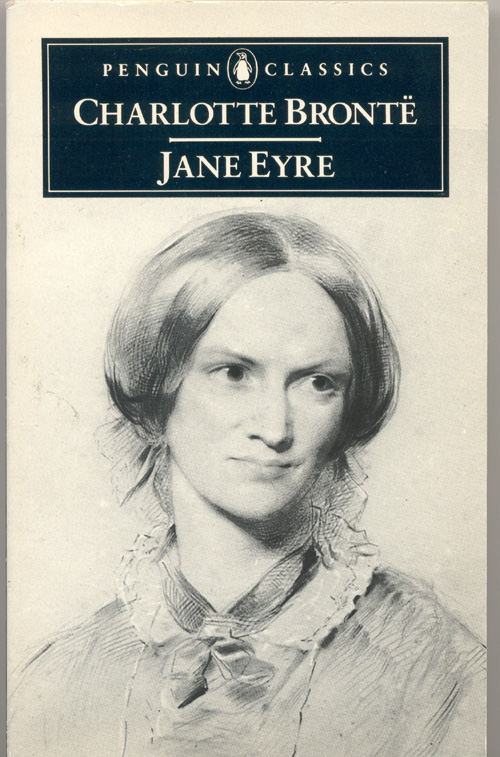
Review: Jane Eyre by Charlotte Bronte

Jane Eyre
by Charlotte Bronte
Smith, Elder, & Co. (October 16, 1847)
532 pages
Fiction/Classic

Summary in a Sentence: 

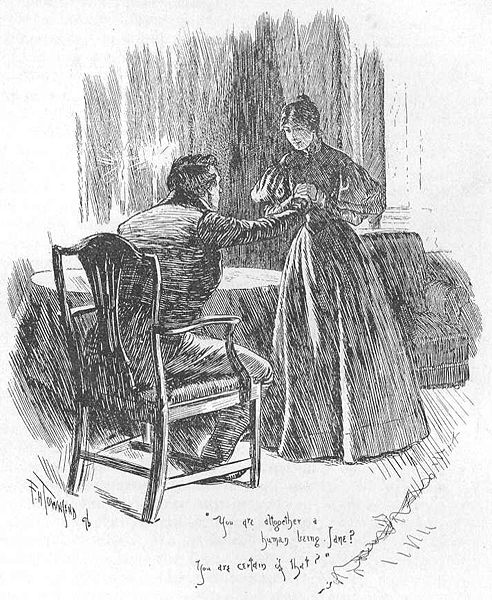
Jane, a plain and penniless orphan in nineteenth-century England, accepts employment as a governess at Thornfield Hall and soon finds herself in love with her melancholy employer, Mr. Edward Rochester, a man with a terrible secret.

My Thoughts: 

This isn't my first rodeo with Jane and Mr. Rochester. I first read Jane Eyre in college as part of a Victorian Literature seminar. And yes, that class was AWESOME. Instead of a conventional review, I'd like to touch on a few topics of interest.


Physiognomy and Phrenology:

"I noticed her; I am a judge of physiognomy, and in hers I see all the faults of her class."

Physiognomy was a popular method of character assessment in the 18th and 19th centuries using complicated charts which included measuring the width and height of the forehead and observing the way a person walked to determine certain attributes.

"He lifted up the sable waves of hair which lay horizontally over his brow, and showed a solid enough mass of intellectual organs, but an abrupt deficiency where the suave sign of benevolence should have risen."

Phrenology was a common means of character analysis at the time of Jane Eyre's publication. Developed by F. J. Gall, the practice is based on the assumption that certain traits or characteristics can be located on various points of the skull. Thus the 'organ of veneration' and such that is often mentioned in the novel.

Feminist, What-What?

"Women are supposed to be very calm generally: but women feel just as men feel; they need exercise for their faculties, and a field for their efforts as much as their brothers do; they suffer from too rigid a restraint, too absolute a stagnation, precisely as men would suffer; and it is narrow-minded in their more privileged fellow-creatures to say that they ought to confine themselves to making puddings and knitting stockings, to playing on the piano and embroidering bags. It is thoughtless to condemn them, or laugh at them, if they seek to do more or learn more than custom has pronounced necessary for their sex."
This excerpt speaks to the Victorian ideals that stifled so many women in Bronte's time. Throughout the novel, Jane is constantly striving to overcome oppression and to gain equality, first from Mr. Brocklehurst, then Mr. Rochester, and St. John Rivers. Each of these men prefer to keep Jane in a submissive position, but Jane must remove herself from under the control of each, and returns to Rochester only when their relationship can be that of two equal minds.


Now, for an important query: Which movie adaptation should I watch first??

~ Read for Our Mutual Read, Women Unbound, All About the Brontes, and Take Another Chance Challenges ~

Thursday, April 1, 2010

Wading Through My Wishlist


Recent additions to the Great Monstrosity that is my wishlist....

 Children's Literature: A Reader's History from Aesop to Harry Potter by Seth Lerer
(Found at Rebecca Reads)

The erudite Lerer, whose Inventing English was enthusiastically reviewed in these pages, has now undertaken an ambitious, one-volume history of children’s literature. He begins in classical antiquity and ends with the salutary likes of Weetzie Bat (1989) and the Time Warp Trio, giving particular attention along the way—he being a philologist—to the language of literature, whether critical or narrative. Lerer does an extraordinary job of expanding our understanding of individual titles by richly contextualizing them in the world of their creation and stimulates readers’ imaginations by some surprising juxtapositions (Darwin and Dr. Seuss!). Though the book’s principal audience will be an academic one, general readers will find much of interest here as well.

Desperate Passage: The Donner Party's Perilous Journey West by Ethan Rarick

In late October 1846, the last wagon train of that year's westward migration stopped overnight before resuming its arduous climb over the Sierra Nevada Mountains, unaware that a fearsome storm was gathering force. After months of grueling travel, the 81 men, women and children would be trapped for a brutal winter with little food and only primitive shelter. The conclusion is known: by spring of the next year, the Donner Party was synonymous with the most harrowing extremes of human survival. But until now, the full story of what happened--and what it tells us about human nature and about America's westward expansion--remained shrouded in myth. A fast-paced, heart-wrenching, clear-eyed narrative history, Desperate Passage casts new light on one of America's most horrific encounters between the dream of a better life and the harsh realities such dreams so often must confront.

Governess: The Lives and Times of the Real Jane Eyres by Ruth Brandon
(Found at book-a-rama)

In nineteenth-century England, girls were most commonly educated by governesses; the system was also a way of absorbing the country’s "huge pool of spinsters." (The 1851 census found that thirty per cent of women above the age of twenty were single.) For upper- and middle-class women forced to earn a living, it represented one of the only respectable employments, and often a dreaded inevitability: after succumbing to the profession, in 1820, Claire Clairmont, the cosmopolitan stepsister of Mary Shelley and the mother of Byron’s child, wrote in her journal, "Think of thyself as a stranger and traveller on the earth, to whom none of the many affairs of this world belong." This exploration of the lives of six governesses is as entertaining as the contemporary works of fiction such lives inspired ("Jane Eyre" chief among them), and although the bulk of the primary source material is not new, Brandon displays a keen understanding of a complex educational system that kept its subjects ignorant even while purporting to enlighten.

Related Posts Plugin for WordPress, Blogger...