Showing posts with label England. Show all posts

Monday, December 5, 2016

This Librarian's Quick Picks: Dara Palmer's Major Drama

Dara Palmer's Major Drama
by Emma Shevah
Sourcebooks Jabberwocky (July 2016)
Fiction

Summary:

Dara Palmer dreams of being an actress, but when she does not get a part in the school play she wonders if it is because of her different looks as an adopted girl from Cambodia, so Dara becomes determined not to let prejudice stop her from being in the spotlight.

Why You'll Love It:
  • Dara is a winning, fittingly overdramatic character who starts to grow once she takes a more serious look her life and those in it. 
  • With themes of transracial adoption, racism, identity, friendship, and sibling rivalry (not to mention a hyperactively decorated page design), there's a lot going on here, but Shevah's novel raises interesting questions without attempting to neatly answer them all.
  • Crawford-White's charming doodle illustrations along the margins reflects Dara's inner monologues throughout the book.
Who Should Read It:

Great for 3rd-6th graders...and here's the discussion guide.

What Else You Should Read:

P.S. I've discovered a great place to find more middle grade books! Check out Marvelous Middle Grade Monday for more suggestions.

Saturday, April 3, 2010

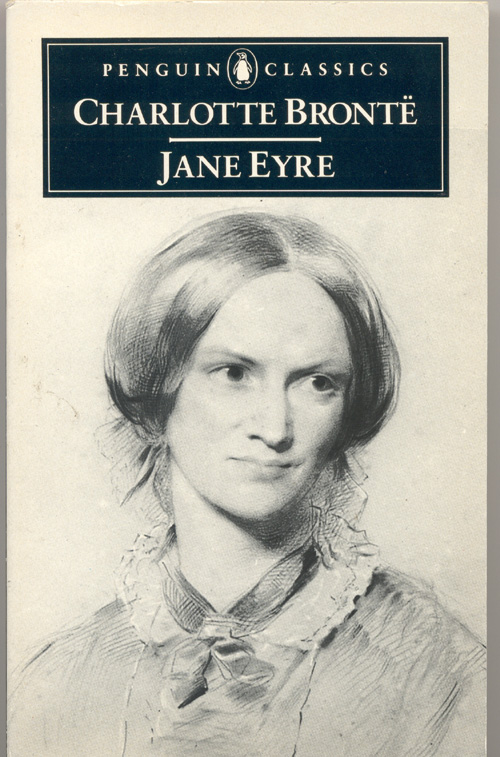
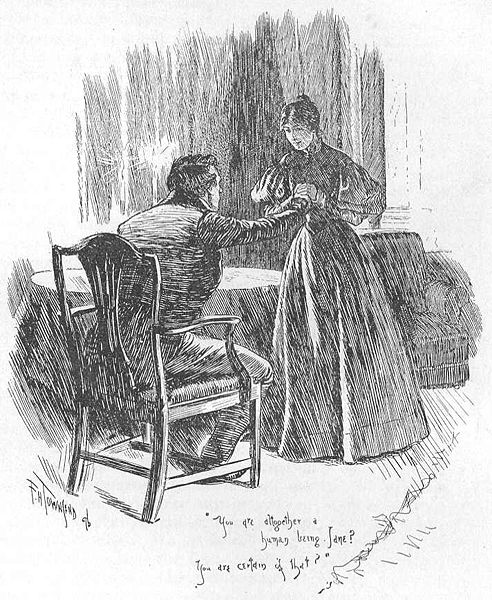
Review: Jane Eyre by Charlotte Bronte

Jane Eyre
by Charlotte Bronte
Smith, Elder, & Co. (October 16, 1847)
532 pages
Fiction/Classic

Summary in a Sentence: 

Jane, a plain and penniless orphan in nineteenth-century England, accepts employment as a governess at Thornfield Hall and soon finds herself in love with her melancholy employer, Mr. Edward Rochester, a man with a terrible secret.

My Thoughts: 

This isn't my first rodeo with Jane and Mr. Rochester. I first read Jane Eyre in college as part of a Victorian Literature seminar. And yes, that class was AWESOME. Instead of a conventional review, I'd like to touch on a few topics of interest.


Physiognomy and Phrenology:

"I noticed her; I am a judge of physiognomy, and in hers I see all the faults of her class."

Physiognomy was a popular method of character assessment in the 18th and 19th centuries using complicated charts which included measuring the width and height of the forehead and observing the way a person walked to determine certain attributes.

"He lifted up the sable waves of hair which lay horizontally over his brow, and showed a solid enough mass of intellectual organs, but an abrupt deficiency where the suave sign of benevolence should have risen."

Phrenology was a common means of character analysis at the time of Jane Eyre's publication. Developed by F. J. Gall, the practice is based on the assumption that certain traits or characteristics can be located on various points of the skull. Thus the 'organ of veneration' and such that is often mentioned in the novel.

Feminist, What-What?

"Women are supposed to be very calm generally: but women feel just as men feel; they need exercise for their faculties, and a field for their efforts as much as their brothers do; they suffer from too rigid a restraint, too absolute a stagnation, precisely as men would suffer; and it is narrow-minded in their more privileged fellow-creatures to say that they ought to confine themselves to making puddings and knitting stockings, to playing on the piano and embroidering bags. It is thoughtless to condemn them, or laugh at them, if they seek to do more or learn more than custom has pronounced necessary for their sex."
This excerpt speaks to the Victorian ideals that stifled so many women in Bronte's time. Throughout the novel, Jane is constantly striving to overcome oppression and to gain equality, first from Mr. Brocklehurst, then Mr. Rochester, and St. John Rivers. Each of these men prefer to keep Jane in a submissive position, but Jane must remove herself from under the control of each, and returns to Rochester only when their relationship can be that of two equal minds.


Now, for an important query: Which movie adaptation should I watch first??

~ Read for Our Mutual Read, Women Unbound, All About the Brontes, and Take Another Chance Challenges ~

Saturday, February 6, 2010

The Ghost Writer by John Harwood

The Ghost Writer
by John Harwood
Mariner Books, 2005
384 pages
Literary Mystery/Gothic Suspense
Library Copy

Summary in a Sentence (or two):

Haunted by his mother's mysterious death, timid, solitary Gerard Freeman lives for two things: his elusive pen pal and the secret manuscript that his mother gave her life to protect. Suspecting that something within that manuscript holds the key to his mother's refusal to return to her childhood home, Gerard sets out to unveil the mystery shrouding his family.

My Thoughts:

You know that book you have to carry with you and read as you walk around your house, bumping your shins on coffee tables? That book you can't tear your eyes away from while eating so you accidentally dump lasagna down your chin, and you don't really care? The Ghost Writer is that kind of book. I read incessantly, stopping only for work, sleep, and any other sort of thing that gets in the way of finishing a great book.

All the elements are here: This book is a creepily Gothic, cozily Victorian story within a story, including one of the most frightening scenes ever to take place in a library. It all begins when Gerard finds a ghost story written by his grandmother Viola while snooping through his mother's room. Interspersed throughout Gerard's narrative set in present time are Viola's short stories, which I found to be my favorite part of the book.

Then, I reached the ending. I won't write anything spoiler-ish here for those of you who haven't read the book, because I think you will enjoy it immensely. I just don't think Harwood quite knew how to finish the dang thing. Regardless, I can't wait to read Harwood's next one, The Seance.

~ Read for the Bibliophilic Books Challenge ~

Also Recommended:
Other reviews:

  • Musings of a Bookish Kitty 

  • S. Krishna's Books 

  • We Be Reading


  • Saturday, November 14, 2009

    The Life of Elizabeth I by Alison Weir

    The Life of Elizabeth I
    by Alison Weir
    Publisher: Ballantine, 1998
    ISBN: 9780345425508
    532 pages
    Genre: History; England & Wales
    Source: Library copy


    Summary in a Sentence:

    Chronicles the life of Queen Elizabeth I, and discusses both her political and private life; includes information on her relationships with Robert Dudley, Mary Stuart, and Philip of Spain.

    My Thoughts: 

    My interest in Queen Elizabeth I has long been fed by documentaries, movies, and historical fiction titles such as I, Elizabeth by Rosalind Miles. I've always found her to be very fascinating and thought it was high time I read a biography about her. But which one do I choose? I found it serendipitous when a student at the high school library at which I'm interning checked in this extensive biography of the Virgin Queen, so I  promptly checked it out myself.

    I'm so glad I did. I've been on a bit of a non-fiction tear lately, and this biography didn't disappoint. Weir is very thorough, covering all aspects of the queen's reign, from her foreign policy to her personal life. The most discussed topic throughout Weir's writing is Elizabeth's battle to stay unmarried. Elizabeth spends years and years doing a courtly and strategic dance with other heads of state, leading them on for as long as possible in courtships she has no intention of agreeing to in order to keep the peace with foreign nations. Weir makes an excellent point that Elizabeth has good reason to be very wary of marriage. Just look at the disastrous marriages that her father kept entering into, and what happened to her unfortunate mother! Elizabeth knew that in order to be the true head of her country, she must remain single. I cannot imagine the pressure she constantly felt from both her advisors and subjects to capitulate and marry.

    This book is recommended to all who are interested in Elizabeth and who want to read an extremely thorough narrative of the queen's private and public life.


    Also Recommended:

    Friday, November 13, 2009

    Atonement by Ian McEwan

    Atonement
    by Ian McEwan
    Publisher: Doubleday, 2001
    ISBN: 9780385503952
    351 pages
    Genre: fiction
    Source: Library audiobook


     Summary in a Sentence: 


    Imaginative thirteen-year-old Briony Tallis, misinterpreting a scene between her older sister Cecilia and Robbie Turner, the housekeeper's son, later accuses Robbie of a crime she has no proof he committed and spends years trying to atone for her actions.

    My thoughts: 

    I usually make a point of not seeing a movie before I get a chance to read the book, but the opposite is true for my experience with McEwan’s Atonement. I rented the movie last summer from Netflix and as soon as the movie ended, I stared at the blank screen for a moment, blinked a couple of times in wonderment, and then hit play and watched it in its entirety a second time. Needless to say, I was completely entranced with the storyline and the cinematography. All of this is to say that after having such a wonderful experience with the movie adaptation, I began to worry that I’d ruined the possibility of having a good reading experience with the novel. I find it difficult to read a book after I’ve seen the movie since I have so many preconceived notions of the characters’ appearance and eccentricities locked into my head visually.

    Never fear. I loved the book just as much as the movie. I actually listened to this book, mostly while driving, and I’m quite lucky I didn’t wind up in a ditch somewhere due to my complete inattention to my surroundings. I became so wrapped up in the characters, the story, and the heart wrenching consequences of one thirteen-year-old’s misinterpretation of a number of events and a rash decision. This was my first foray into Ian McEwan’s writing and it definitely won’t be the last. I was mesmerized with his writing style. The characters, especially that of the young Briony, were so well-drawn.  She is so frustratingly self-absorbed and narcissistic in the beginning of the novel, and her imaginative whims that so many young girls possess lead to such a catastrophic turn of events. I’ll say no more. You must read it for yourself.

    I don’t often reread books anymore due to the sheer quantity of amazing novels out there that I must get my hands on, but I can definitely say this is a book I will revisit, perhaps a few times, in the future. 

    Rating:  5/5


    Also Recommended:
    Other Reviews:
    Related Posts Plugin for WordPress, Blogger...
     
    ↑