Showing posts with label wishlist. Show all posts

Saturday, May 1, 2010

Wading Through My Wishlist

Wish List logo

A sneak peak at what has been recently added to my great monstrosity of a wishlist...
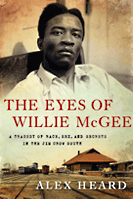

book cover of Eyes of Willie McGee by Alex Heard
The Eyes of Willie McGee: A Tragedy of Race, Sex, and Secrets in the Jim Crow South
by Alex Heard
(Found at Booklust)

An iconic criminal case—a black man sentenced to death for raping a white woman in Mississippi in 1945—exposes the roiling tensions of the early civil rights era in this provocative study. McGee's prosecution garnered international protests—he was championed by the Communist Party and defended by a young lawyer named Bella Abzug, while luminaries from William Faulkner to Albert Einstein spoke out for him—but journalist Heard finds the saga rife with enigmas. The case against McGee, hinging on a possibly coerced confession, was weak and the legal proceedings marred by racial bias and intimidation. But Heard contends that McGee's story—that he and the victim, Willette Hawkins, were having an affair—is equally shaky. The author's extensive research delves into the documentation of the case, the public debate surrounding it, and the recollections of McGee and Hawkins's family members.
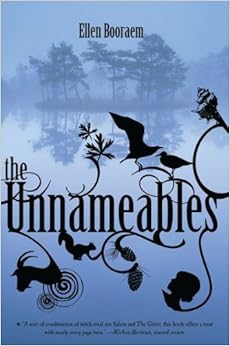
book cover of Unnameables by Ellen Booraem The Unnameables by Ellen Booraem
(Found at Fyrefly's Book Blog)

The people of the island Island are an insatiably strict lot. Everything must have a use, and their names must match that use: cows are called Greater Horned Milk Creatures, seabirds are nameless because they are useless, Prudence Carpenter gets renamed Prudence Learned when she becomes a teacher, and so on. Medford Runyuin has trouble fitting in, being that he was shipwrecked on the island as a baby and has no useful name, though he was taken in by the Carvers. In secret, he whittles beautiful carvings out of wood, an abomination in the eyes of usefulness that could get him exiled. Then, a strange goat-man creature arrives, befriends Medford, and in a flurry of chaos upsets the neat order of things. If the execution doesn’t quite match up to the highly imaginative premise of the story—Booraem’s renamed world is a little rough around the edges—readers will still come away knowing that artistry and beauty are by no means useless.
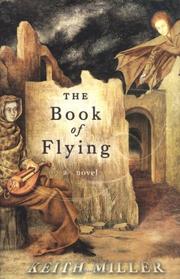
book cover of Book of Flying by Keith Miller
The Book of Flying by Keith Miller
(Found at The Zen Leaf)

Pico is the librarian in his city by the sea: a humble, gentle man, a collector of books, a guardian and caretaker of the stories that are his breath and his life. One fateful day, he falls in love with Sisi, a beautiful, winged girl who cannot truly love a wingless creature like him. So Pico sets off to find Morning Town, where legend says he will find the Book of Flying and get his wings. On the way he has fabulous adventures and meets astonishing people, each of whom provides a gateway to learning something important about himself. Perhaps his most important discovery is that he is the hero of his own story. A beautiful and haunting modern fable that reads like exquisite poetry, Miller's first novel is a coming-of-age story cloaked in the language of myth in which Pico, as his humanity matures and expands to encompass those who are like and those who are unlike him, initially represents and eventually becomes the reader.

Thursday, April 15, 2010

Wading Through My Wishlist


Recent additions to the Great Monstrosity that is my wishlist....

Neverwhere by Neil Gaiman
(Found at Book Nut)

Gaiman assumes the role of narrator for his latest book, offering an intimate reading that steals one's attention almost immediately and keeps the listener involved throughout. As the story is based in the United Kingdom, Gaiman is a quintessential raconteur for the tale, with his charming Scottish brogue instilling life and spirit into the central character of Richard Mayhew. Pitch perfect, with clear pronunciation, Gaiman invites listeners into his living room for a fireside chat, offering a private and personal experience that transcends the limitations of traditional narration. The author knows his story through and through, capturing the desired emotion and audience reaction in each and every scene. His characters are unique, with diverse personalities and narrative approaches, and Gaiman offers a variety of dialects and tones. The reading sounds more like a private conversation among friends with Gaiman providing the convincing and likable performance the writing deserves.

The Birth House: A Novel by Ami McKay
(Found at Maw Books)

When Dr. Gilbert Thomas, self-proclaimed expert in hygienic, pain-free childbirth, opens a practice in a Nova Scotia coastal village during the World War I years, it sets the stage for a classic conflict between long-held traditions and modern medicine. Seventeen-year-old Dora Rare, the only Rare daughter within five generations, improves her lot in life by becoming the apprentice of Marie Babineau, the independent but caring Acadian midwife who helped bring several generations of Scots Bay residents into the world. The women of the village (not to mention their husbands) grow bitterly divided when Dr. Thomas calls the health and safety of expectant mothers into question. His vengeful actions toward Dora herself--a young woman looking for guidance with her own love life--turn particularly personal as well. McKay has fashioned what she terms a "literary scrapbook," reproducing and re-creating historical news clippings, advertisements, and letters within the text.

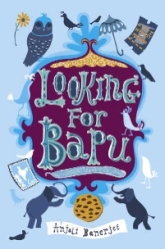
Looking for Bapu by Anjali Banerjee
(Found at A Striped Armchair)

When his grandfather Bapu suffers a stroke, eight-year-old Anu runs for help, but his grandfather dies in the hospital. Grief-stricken, Anu remembers Bapu's daily Hindu rituals and shared moments, and he continues to see Bapu in dreams and visions. As these fade, Anu tries to reconnect with Bapu through a variety of imaginative strategies, including a hilarious attempt to become a sadhu or holy man. His friendships with classmate Unger and neighbor Izzy also add humorous elements that lighten the tone and move the plot. But there are more serious moments as well. Set in Seattle shortly after 9/11, Anu's narrative records incidents of prejudice, as when one emergency worker refers to him as "a little Islam." With episodes that ring true to a boy's perspective, Banerjee's novel provides discussable issues and multicultural insights as well as humor and emotion.  

What do you say, readers? Sound good/bad? Have you read any of these?

Thursday, April 1, 2010

Wading Through My Wishlist


Recent additions to the Great Monstrosity that is my wishlist....

 Children's Literature: A Reader's History from Aesop to Harry Potter by Seth Lerer
(Found at Rebecca Reads)

The erudite Lerer, whose Inventing English was enthusiastically reviewed in these pages, has now undertaken an ambitious, one-volume history of children’s literature. He begins in classical antiquity and ends with the salutary likes of Weetzie Bat (1989) and the Time Warp Trio, giving particular attention along the way—he being a philologist—to the language of literature, whether critical or narrative. Lerer does an extraordinary job of expanding our understanding of individual titles by richly contextualizing them in the world of their creation and stimulates readers’ imaginations by some surprising juxtapositions (Darwin and Dr. Seuss!). Though the book’s principal audience will be an academic one, general readers will find much of interest here as well.

Desperate Passage: The Donner Party's Perilous Journey West by Ethan Rarick

In late October 1846, the last wagon train of that year's westward migration stopped overnight before resuming its arduous climb over the Sierra Nevada Mountains, unaware that a fearsome storm was gathering force. After months of grueling travel, the 81 men, women and children would be trapped for a brutal winter with little food and only primitive shelter. The conclusion is known: by spring of the next year, the Donner Party was synonymous with the most harrowing extremes of human survival. But until now, the full story of what happened--and what it tells us about human nature and about America's westward expansion--remained shrouded in myth. A fast-paced, heart-wrenching, clear-eyed narrative history, Desperate Passage casts new light on one of America's most horrific encounters between the dream of a better life and the harsh realities such dreams so often must confront.

Governess: The Lives and Times of the Real Jane Eyres by Ruth Brandon
(Found at book-a-rama)

In nineteenth-century England, girls were most commonly educated by governesses; the system was also a way of absorbing the country’s "huge pool of spinsters." (The 1851 census found that thirty per cent of women above the age of twenty were single.) For upper- and middle-class women forced to earn a living, it represented one of the only respectable employments, and often a dreaded inevitability: after succumbing to the profession, in 1820, Claire Clairmont, the cosmopolitan stepsister of Mary Shelley and the mother of Byron’s child, wrote in her journal, "Think of thyself as a stranger and traveller on the earth, to whom none of the many affairs of this world belong." This exploration of the lives of six governesses is as entertaining as the contemporary works of fiction such lives inspired ("Jane Eyre" chief among them), and although the bulk of the primary source material is not new, Brandon displays a keen understanding of a complex educational system that kept its subjects ignorant even while purporting to enlighten.

Thursday, March 11, 2010

Wading Through My Wishlist


Recent additions to the Great Monstrosity that is my wishlist....

Origin by Diana Abu-Jaber
(Found at A Striped Armchair)

Abu-Jaber, who dealt with Arab-American themes in her earlier novels, Crescent and Arabian Jazz, shows her versatility in this gripping contemporary thriller. A spike in the number of local SIDS deaths piques the interest of Lena Dawson, a fingerprint specialist at a Syracuse, N.Y., forensics lab. Is it a statistical fluke or is there a killer at work? Determined to account for the dead infants, Lena joins the investigation, which stirs tantalizing memories from her dimly recollected early childhood. Despite her fragile mental state, Lena proves capable of surprising resolve. Her relationship with her protective ex-husband, her budding romance with a detective and her quest for her own lost past add psychological depth. Abu-Jaber's lovely nuanced prose conveys the chill of an upstate New York winter as well as it does Lena's drab existence before she was drawn into the mystery of the crib deaths. This enthralling puzzle will appeal to both crime fans and readers of literary fiction.


The Archer's Tale by Bernard Cromwell
(Found at Layers of Thought)

Already a best seller in England under the title Harlequin, this novel is the opening salvo of a new series by the author of the well-known Richard Sharpe books (e.g., Sharpe's Trafalgar). Set in the early 1400s at the beginning of the Hundred Years War between England and France, this novel depicts one of the most bloody and violent periods in the history of conflict between these two nations. After the theft of the treasure of Hookton, a broken lance thought to have been the weapon St. George used to slay the dragon, young Thomas, the bastard son of the village priest and a skilled longbowman, joins the English army in hopes of recovering the relic. Instead, he finds himself caught up in the invasion of France. Cornwell has crafted an extremely well-written novel, grounded in actual historic events. As in the Sharpe books, Cornwell's battle scenes are particularly memorable. This series, however, promises to be a bit meatier. More attention is paid to fascinating secondary characters and the roles they play in the political, religious, and social arenas of the time. Highly recommended.


Flow by Susan Kim
(Found at Steele on Entertainment)

Written like a sassy young women's magazine with first-person narrative and the occasional astonished exclamation point, a normally taboo topic claims attention with the surprising-and sometimes horrifying-history of cultural reactions to menstruation (Pliny believed menstrual blood was toxic to flora and fauna), feminine "hygiene," and the enticing yet under-researched future of period-free birth control methods. Sprinkled throughout with entertainingly naïve ads from each era of the 20th-century as well as many references to scientific findings, author and graphic designer Stein and Kim, a graphic novelist (Circle of Spies) and writer of the play adaptation of The Joy Luck Club, evoke a light-hearted tone about their serious subject. They cover everything from menarche to menopause, including what menstruation is (which receives an outstandingly clear explanation) plus an enlightening discussion of the pad v. tampon debate, which at bottom was a sophisticated marketing strategy.

Thursday, February 25, 2010

Wading Through My Wishlist


Recent additions to the Great Monstrosity that is my wishlist....
The Last Man on the Moon
Gene Cernan

Cernan's frank, earthy memoir of his years at NASA adds another entertaining, informative volume to the burgeoning shelf of books illuminating the inner workings of the space program and the people who made it happen. Coauthor Don Davis, a veteran journalist, helps Cernan craft a colloquial prose style that nicely captures the competitive, macho personality that seemed virtually mandatory for astronauts in the 1960s and '70s. Cernan candidly depicts the reckless streak that twice led to needless injuries jeopardizing his spot on a mission.  Detailed accounts of each flight, including technical problems and personal tensions (particularly with Apollo 17 teammate Jack Schmitt, distrusted because he was a scientist, not a test pilot), remind readers that the space program is a human endeavor, with inevitable failures that make the triumphs that much sweeter.
~Found at S. Krishna's Books~


The Case of the Missing Books
by Ian Sansom

In a field crowded with unlikely sleuths, Israel Armstrong--chubby, nervous, clumsy, headache prone, underachieving--stands out. Hired to be a librarian, he arrives to find his library closed and his position retitled "Outreach Support Officer"--driver of the decrepit mobile library. Worse, the books he's supposed to fill it with have disappeared. Worse yet, his new boss will accept his resignation only if he finds the missing books first. Between Israel's inept sleuthing and the general unhelpfulness of the locals, it looks as if he'll be in Tumdrum a long, long time. Begging to be read aloud, they unfold with a rollicking blend of dry humor, slapstick, and sheer farce that is nonetheless anchored by a strong sense of place and a sobering sense of the place's troubled history. Librarians have found themselves a new hero in Israel Armstrong, who, despite his unheroic demeanor, is a champion against bullshit and bureaucracy in the service of books.
~Found at Tutu's Two Cents~


The Female of the Species
by Lionel Shriver

Gray Kaiser is a renowned anthropologist whose career took off when she discovered a remote African village lorded over by white man Corgie, whose plane crash had convinced the locals that he was a god. Now 59, Gray returns to Il-Ororen to make a film of the village as it was, with the help of her 40-ish assistant Errol. Their lives become entangled with Raphael, the 25-year-old grad student whose uncanny resemblance to Corgie makes him the star of the film and eventually Gray's first lover. This is a remarkable book: it is at once full of very predictable plot turns, yet compelling to read; the three main characters are often cliched and transparent, yet they are striking, original, memorable characters. Fascinating and warmly recommended, though perhaps not for those whose taste runs to sophisticated fiction.
~Found at At Home With Books~


Thursday, February 18, 2010

Wading Through My Wishlist


Recent additions to the Great Monstrosity that is my wishlist....

Irreplaceable by Stephen Lovely

The last thing in the world grieving Iowa widower Alex Voorman wants is to hear from the woman who now has his wife's heart. It's been a year since his beloved Isabel was killed in a truck/bicycle accident, and he's barely moving on. Close to his mother-in-law, Bernice, he resents her push for him to speak with Chicagoan Janet Corcoran, who was near death until she received Isabel's heart. First-time novelist Lovely writes unflinchingly of the medical and emotional realities that attend a heart transplant and the terrible toll it can take on recipients and their families, who are desperate to stop worrying, and the donors' loved ones, who will never stop grieving.


The Lunatic, the Lover, and the Poet by Myrlin Hermes

A Divinity scholar at Wittenberg University, Horatio prides himself on his ability to argue both sides of any intellectual debate but is himself a skeptic, never fully believing in any philosophy. That is, until he meets the outrageous, provocative, and flamboyantly beautiful Prince of Denmark, who teaches him more about both Earth and Heaven than any of his books. But Hamlet is also irrationally haunted by intimations of a tragic destiny he believes is preordained.
When a freelance translation job turns into a full-scale theatrical production, Horatio arranges for the theater-loving prince to act in the play-disguised as the heroine! This attracts the attention of Horatio's patroness, the dark and manipulative Lady Adriana. A voracious and astute reader of both books and people, she performs her own seductions to test whether the "platonic true-love" described in his poems is truly so platonic. But when a mysterious rival poet calling himself "Will Shake-speare" begins to court both Prince Hamlet and his Dark Lady, Horatio is forced to choose between his skepticism and his love. ~ Found via Steele on Entertainment ~


Black No More by George Samuel Schuyler

What would happen to the race problem in America if black people turned white? Would everybody be happy? These questions and more are answered hilariously in Black No More, George S. Schuyler's satiric romp. Black No More is the story of Max Disher, a dapper black rogue of an insurance man who, through a scientific transformation process, becomes Matthew Fisher, a white man. Matt dreams up a scam that allows him to become the leader of the Knights of Nordica, a white supremacist group, as well as to marry the white woman who rejected him when he was black. Black No More is a hysterical exploration of race and all its self-serving definitions. If you can't beat them, turn into them. ~ Found via Rebecca Reads ~


What do you say, readers? Sound good/bad? Have you read any of these?

Thursday, February 11, 2010

Wading Through My Wishlist


Recent additions to the Great Monstrosity that is my wishlist....
Disgrace introduces us to middle-aged professor David Lurie shuffles numbly through the shifting landscape of postapartheid South Africa. After he gets fired for sleeping with one of his students--and refusing to express remorse--Lurie finds shelter with his grown daughter and is exposed to a social reality that threatens more than his own sense of security. Winner of the Booker Prize, Coetzee's eighth novel employs spare, compelling prose to explore subtly the stuttering steps one man takes in a new world.  ~ Found at Farm Lane Books ~


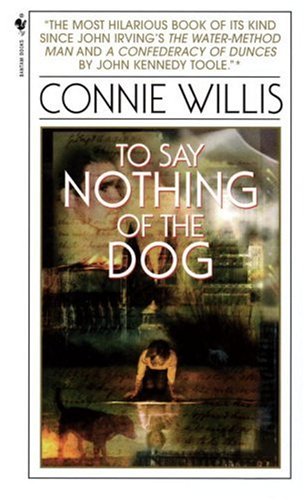
To Say Nothing of the Dog is a science-fiction fantasy in the guise of an old-fashioned Victorian novel, complete with epigraphs, brief outlines, and a rather ugly boxer in three-quarters profile at the start of each chapter. Ned Henry is badly in need of a rest. He's been shuttling between the 21st century and the 1940s searching for a Victorian atrocity called the bishop's bird stump. It's part of a project to restore the famed Coventry Cathedral, destroyed in a Nazi air raid over a hundred years earlier.
But then Verity Kindle, a fellow time traveler, inadvertently brings back something from the past. Now Ned must jump back to the Victorian era to help Verity put things right--not only to save the project but to prevent altering history itself.


What keeps Unwind moving are the creative and shocking details of Shusterman's kid-mining dystopia. The Second Civil War was fought over reproductive rights. The chilling resolution: Life is inviolable from the moment of conception until age thirteen. Between the ages of thirteen and eighteen, however, parents can have their child "unwound," whereby all of the child's organs are transplanted into different donors, so life doesn't technically end. Connor is too difficult for his parents to control. Risa, a ward of the state is not enough to be kept alive. And Lev is a tithe, a child conceived and raised to be unwound. Together, they may have a chance to escape—and to survive.


What do you say, readers? Sound good/bad? Have you read any of these?


Thursday, February 4, 2010

Wading Through My Wishlist


 Recent additions to the Great Monstrosity that is my wishlist....

God vs. Darwin deftly answers complex questions: Why is there such intense antagonism to the teaching of evolution in the United States? What have the courts said about the various attempts to oppose it? Sprinkled with interesting tidbits about Charles Darwin and the major players of the evolution vs. creationism debate, readers will find that God vs. Darwin is charming in its embrace of the strong passions aroused from the topic of teaching evolution in schools.


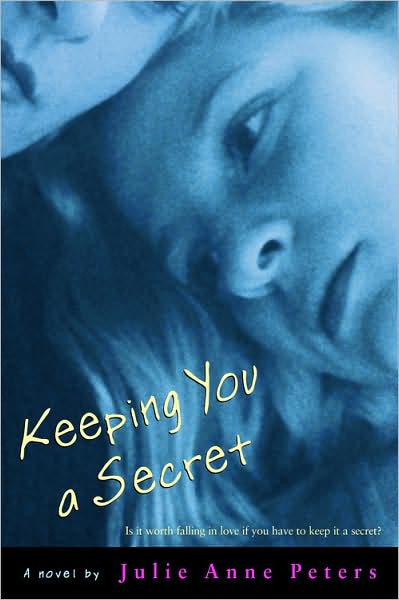
As she begins a very tough last semester of high school, Holland finds herself puzzled about her future and intrigued by a transfer student who wants to start a lesbigay club at school. I found Keeping You A Secret via Amanda at The Zen Leaf. Here is an excerpt from her fabulous review:

Holland has never really thought about her sexuality before. She lives in an area with small-town mentality and she knows no one who's gay - until Cece shows up at school for Holland's last semester of her senior year. Cece is out and proud, which sets off ripples at school, ripples that range from harassment to vandalism. But worse are the ripples set off in Holland, who finds herself falling desperately in love with this girl.

In an era that witnessed the rise of celebrity outlaws like Baby Face Nelson, Pretty Boy Floyd, and Bonnie and Clyde, John Dillinger was the most famous and flamboyant of them all. Reports on the man and his misdeeds--spiced with accounts of his swashbuckling bravado and cool daring--provided an America worn down by the Great Depression with a story of sex and violence that proved irresistible. In Dillinger's Wild Ride, Elliott J. Gorn provides a riveting account of the year between 1933 and 1934, when the Dillinger gang pulled over a dozen bank jobs, and stole hundreds of thousands of dollars. A dozen men--police, FBI agents, gangsters, and civilians--lost their lives in the rampage, and American newspapers breathlessly followed every shooting and jail-break. As Dillinger's wild year unfolded, the tale grew larger and larger in newspapers and newsreels.


What do you say, readers? Sound good/bad? Have you read any of these?

Thursday, January 28, 2010

Wading Through My Wishlist


Recent additions to the Great Monstrosity that is my wishlist....


Polish-born Kramer, president of the Holocaust Resource Foundation at Kean University, was a teenager when her family and others hid from the Nazis in a secret bunker, rescued by a former housekeeper and her husband, a reputed drunken anti-Semite who turned out to be an avenging angel. Kramer's extensive recollections range from a liaison that threatened the household and daily squabbles in the tomblike underground quarters where food was scarce to their fear of discovery by the Nazis and the shock and desperation of learning about relatives and friends who had been killed. Her sister was sold out by a neighbor boy for a few liters of vodka. This vividly detailed and taut narrative is a fitting tribute to the bravery of victims and righteous gentiles alike.


Cleopatra, or Kleopatra as her name is spelled in Greek, inherited little from her father, Ptolemy XII, other than his Macedonian profile and the throne of Egypt. Where he was obese, indolent, and self-indulgent, the young queen was cunning, ambitious, and ruthless. Ptolemy, through gross mismanagement and a series of disastrous financial alliances with Rome, had alienated the Egyptian people to the point of rebellion. After his death, Kleopatra was exiled by her brother/husband and his cabinet. First novelist Essex focuses on Kleopatra's early years and on her Greek origins. The Greek-speaking Ptolemy pharaohs neither knew nor cared about the customs of Egypt, but Kleopatra learned the Egyptian language, something no Ptolemy had done before. In return, the Egyptians gave her their support in her struggle to wrest the throne from her brother. (Found via The True Book Addict)


Seven hundred years ago, a Spanish doctor named Arnold of Villanova wanted to make a baby. He put semen in a womb-shaped vase and waited. The result was disappointing. We can shake our heads at the naivete of believing sperm contains teeny-tiny human beings just needing the proper place to grow. But physician and medical journalist Randi Hutter Epstein is here to tell us in "Get Me Out," her engrossing survey of the history of childbirth, that even with all of today's whiz-bang technology, "we are still in the dark about so many things that go into making babies."  The history of childbirth is filled with grief as well as joy, and not all the stories amuse. Later, the author raises questions about the moral, legal and medical consequences of the growing -- and little-regulated -- fertility industry. The description of doctors watching over frozen, sperm-filled vials echoes, however faintly, the story of Arnold of Villanova and his vase. Childbirth has come a very long way since that experiment, but perhaps not as far as we would like to think.


What do you say, readers? Sound good/bad? Have you read any of these?

Thursday, January 21, 2010

Wading Through My Wishlist


Recent additions to the Great Monstrosity that is my wishlist....

~ Found at Passages to the Past ~

 What if the old maid of Amherst wasn’t an old maid at all? Her older brother, Austin, spoke of Emily as his “wild sister.” Jerome Charyn, continuing his exploration of American history through fiction, has written a startling novel about Emily Dickinson in her own voice, with all its characteristic modulations that he learned from her letters and poems. The poet dons a hundred veils, alternately playing wounded lover, penitent, and female devil. We meet the significant characters of her life, including her tempestuous sister-in-law, Susan Gilbert; her brooding father, Edward; and the Reverend Charles Wadsworth, who may have inspired some of her greatest letters and poems.


~ Found at Book Nut ~

In The Year My Son and I Were Born, Soper takes us along on her personal journey through Thomas’s tumultuous first year—as she strives to balance the loss of the child she thought she would have with loyalty for the baby she actually holds in her arms. Can she love Thomas for himself? Can she protect him from the world’s insensitivity—andfrom her own doubts?
Ultimately, Soper escaped her downward spiral of despair and emerged with newfound peace. Antidepressant therapy restored her equilibrium, and interactions with friends and family brought needed perspective. But the most profound change came through her growing relationship with Thomas. His radiant presence shone through her outer layers of self, where fear and guilt festered, and reached the center of her very being—where love, acceptance, and gratitude blossomed in abundance.


For his 65th birthday, acclaimed novelist Michael Mewshaw took a 4,000-mile overland trip across North Africa. Arriving in Egypt during food riots, he heads west into Libya, where billions in oil money have produced little except citizens eager to flee to Europe or join the jihad in Iraq. In Tunis, Mewshaw visits an abandoned Star Wars movie set where Al Qaeda has just kidnapped two tourists.
Ignoring U.S. Embassy warnings he crosses into Algeria, traveling through mountain towns and seething metropolises where 200,000 people have died during more than a decade of sectarian violence. Searching for the tombs of seven monks murdered by Islamic fundamentalists, he reaches a village where six more people have been beheaded the day before. When he interviews a repentant terrorist responsible for 5,000 deaths,  In the end, the reader, like the author, is immersed in a fascinating adventure that’s sometimes tragic, often funny, occasionally terrifying and always a revelation of a strange place and its people.

Your turn, readers: Sound good? Bad? Have you read any of these already?

Thursday, January 7, 2010

Wading Through My Wishlist


Recent additions to the Great Monstrosity that is my wishlist....

At a time when women were excluded from science, a young girl made a discovery that marked the birth of paleontology and continues to feed the debate about evolution to this day.

Mary Anning was only twelve years old when, in 1811, she discovered the first dinosaur skeleton--of an ichthyosaur--while fossil hunting on the cliffs of Lyme Regis, England. Until Mary's incredible discovery, it was widely believed that animals did not become extinct. The child of a poor family, Mary became a fossil hunter, inspiring the tongue-twister, “She Sells Sea Shells by the Seashore.” Once news of the fossils reached the halls of academia, it became impossible to ignore the truth. Mary’s peculiar finds helped lay the groundwork for Charles Darwin’s theory of evolution, laid out in his On the Origin of Species. Darwin drew on Mary’s fossilized creatures as irrefutable evidence that life in the past was nothing like life in the present.

~ Found over at At Home With Books ~

"Equipped with nothing but an old boat and a new marriage, Janna Cawrse Esarey recounts her two and a half years at sea with wry humor, keen observations, and descriptions vivid enough to satisfy even the most seasoned traveler. As Janna and her husband cross the globe, they learn that sometimes relationships are the trickiest waters...yet all storms can be weathered with enough courage and determination. The Motion of the Ocean is the quintessential summer read for anyone seeking an adventure in life, love, or self-discovery."-- Jen Lancaster, author of Bitter is the New Black


Thursday, December 17, 2009

Wading Through My Wishlist


Recent additions to the Great Monstrosity that is my wishlist....

I just realized that all of the books in this post come from Eva of A Striped Armchair. We tend to have similar reading tastes, and she picks the BEST literature. I love her blog. Seriously, check it out if these books sound interesting to you :)


In The Hedgehog’s Dilemma, Warwick gets to the bottom of the sudden boom in hedgehog popularity and examines the relationship between the hedgehog and man, covering both the mammal’s natural and un-natural evolution, from despised vermin to much-beloved beast. A historical and cultural exploration of the hedgehog, this is an engaging, informative, and charming look at the fascinating world of hedgehogs.
For more than twenty years, Hugh Warwick has tracked hedgehogs across the globe in the slim hopes of coming across the hedgehog’s tiny, but unmistakable, pawprints. Warwick isn’t alone in his endeavors. In England and Wales, the Environment Agency, Great Britain’s leading environmental group, recently selected the hedgehog as its new mascot; while in America, which lacks a native hedgehog species, fanciers flock to the biannual Mile High Hedgehog Show to celebrate en masse the little spiny urchin. But why does the hedgehog seem to have such universal appeal?


Juno McKay is thrilled when her best friend Christine returns to their upstate New York college, Penrose, to give a lecture about the stained-glass window Juno will be restoring. Christine shocks her audience when she theorizes that Augustus Penrose, the college's founder, depicted his sister-in-law, Clare, not his wife, Eugenie, in the window. After the lecture, Juno finds Christine somewhat troubled and worries about her after she boards her train home. A week later, Juno and her 15-year-old daughter, Bea, kayak on the Hudson River to the Penrose estate, Astolat, where they discover a body: Christine. Heartbroken by her friend's death, which appears to be a suicide, Juno tries to find out what could have driven her over the edge. The search leads Juno in unexpected directions, one of which involves her handsome ex-husband, Neil, who has been a patient in the local asylum for 14 years, ever since he tried to drown himself, Juno, and Bea. Goodman is spot-on at developing a creepy, gothic atmosphere and delivering a compelling, tightly plotted mystery.


Although Gabrielle Walker, author of Snowball Earth (2003), holds a Cambridge doctorate in chemistry, her ear for storytelling is perfect for popular science. One critic praises her lyrical style; others praise her use of detail, anecdote, and science that wouldn't be out of place in Meteorology 101. Critics inevitably compare Walker to Dava Sobel, one of the genre's most popular writers. Walker has honed her skills as a contributing editor of Scientific American, and her breezy tone fits her subject perfectly. Even though her choice to start from square one may frustrate readers with some previous knowledge in the area, Walker has penned an engaging, readable book-nothing too heavy, and worth the reader's every breath.

Related Posts Plugin for WordPress, Blogger...