Showing posts with label animals. Show all posts

Tuesday, November 8, 2016

Kid Lit Pick: Samson in the Snow by Philip Stead

Samson in the Snow
by Philip C. Stead
Roaring Brook, 2016
Picture Book

Summary:

One sunny day Samson, a large and friendly woolly mammoth, encounters a little red bird who is looking for yellow flowers for her mouse friend (whose favorite color is yellow). As she flies off with the flowers, Samson wonders what it must be like to have a friend. He wonders this for so long, in fact, that he falls asleep and wakes up to a world covered in snow. In the midst of a blizzard, Samson finds and shelters the little red bird and flower-loving mouse in a tender tale of kindness and unexpected friendship.

Why You'll Love It:


  • Stead returns to themes he's made his own: friendship, acceptance, and love for small, ordinary objects that most people overlook. 
  • The contrast between the very large and the very small contributes to the story's magic, and so does Samson, a hero who is tender, patient, and loyal.
  • Stead has tackled the illustrations without his partner and wife, Erin, this time around, and the pictures have a sturdy feel, grounded by the mastodon's large, reddish-brown figure. 


Who Should Read It:

Great for PK-2nd grade.

What Else You Should Read:


Tuesday, November 1, 2016

Kid Lit Quick Pick: Flying Frogs and Walking Fish

book cover children's literature nonfictionFlying Frogs and Walking Fish
by Steve Jenkins and Robin Page
Houghton Mifflin Harcourt
Informational picture book

Summary:

See animals roll, fly, walk, leap, climb, swim and even flip! This book melds science, art, biology, and the environment to show how animals move in our world today.

Why You'll Love It:

  • The award-winning husband-and-wife team neatly categorize animal locomotion into seven distinct groups and then introduce each section with a common animal and basic information regarding its typical movement.
  • Readers can find additional facts about each animal in the end pages, neatly organized into categories of locomotion (walking, leaping, swimming, climbing, flying, rolling, jetting).
  • Good for browsing--with the potential for launching readers into further investigation.
  • Set against white space, the collage illustrations portray the animals in a subdued palette of earth tones that enhances the natural representation of each creature.


Who Should Read It:

Great for kindergarten thru 3rd graders.


What Else You Should Read:


Tuesday, November 24, 2015

This Librarian's Quick Picks: Night World

Night World by Mordecai Gerstein book coverNight World
by Mordicai Gerstein
Little, Brown (June 2015)
Picture Book

Summary:

Sylvie the cat persuades her boy to go into the darkness very late at night, where they are greeted by the shadows of roses and other flowers, and by nocturnal animals who whisper, "it's almost here." 

Why You'll Love It:
  •  This book will stand the test of repeated readings. The illustrations are full of seek-and-find elements that will have readers looking through the book again and again.
  • Bedtime stories are perennial favorites, but this celebration of sunrise adds a new twist: could work as both a morning and nighttime read.
  • Educators will see numerous science curriculum tie-ins here: animal behavior; concepts of day, night, and dawn.

Who Should Read It:

Great for PreK-2nd graders.


Night World illustrations Mordicai Gerstein


What Else You Should Read:

Saturday, April 4, 2015

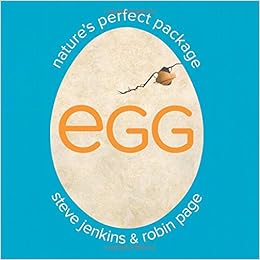
This Librarian's Quick Picks: Egg -- Nature's Perfect Package

Egg Nature's Perfect Package by Steve Jenkins book coverEgg: Nature's Perfect Package
by Steve Jenkins
Houghton Mifflin Harcourt (March 3, 2015)
Nonfiction/Informational Picture Book

Summary:

Explore how a simple, often colorful, sometimes surprisingly shaped package, reveals nature's life cycle, unusual animal defensive strategies, parenting behavior, evolution, and more, in this illustrated non-fiction picture book.

Why You'll Love It:
  •  Jenkins' signature torn paper and collage illustrations are featured against white backgrounds, really making the images pop. 
  • Jenkins explores 54 creatures and why they lay eggs the way they do -- for example, the black-spotted sticky frog lays eggs in a carnivorous pitcher plant. Hello, booktalk hook!!!
  • The final pages illustrate the cycles of a chicken and alligator as each creature develops over time, in five stages from embryo to hatchling, which lends itself nicely to compare and contrast lessons.

Who Should Read It:

Great for grades K-3...and here's the educator's guide (scroll down to p. 7)


steve jenkins egg hatching illustration


What Else You Should Read:

Saturday, February 21, 2015

This Librarian's Quick Picks: Winter Bees & Other Poems of the Cold

winter bees and other poems of the cold by joyce sidman book cover nonfiction poetryWinter Bees & Other Poems of the Cold
by Joyce Sidman; illustrations by Rick Allen
Houghton Mifflin (November 4, 2014)
Nonfiction poetry

Summary:

A collection of poems that explores how animals survive the cold during the winter season. Provides additional facts about the animals and the season. 

Why You'll Love It:
  • While most poems address familiar topics (snowflakes, moose, trees, chickadees), springtails (snow fleas) and skunk cabbage (an early flowering spring plant) will be new to many.
  • Each poem is accompanied by facts as well as a glossary in the back of the book.
  • This book perfectly marries poetry, science, and art! Check out the hand-colored linoleum blocks used in the illustrations:

hand-colored linoleum blocks used in the illustrations

Who Should Read It:

Great for grades 1-5...and here's the educator's guide.

What Else You Should Read:

Saturday, February 7, 2015

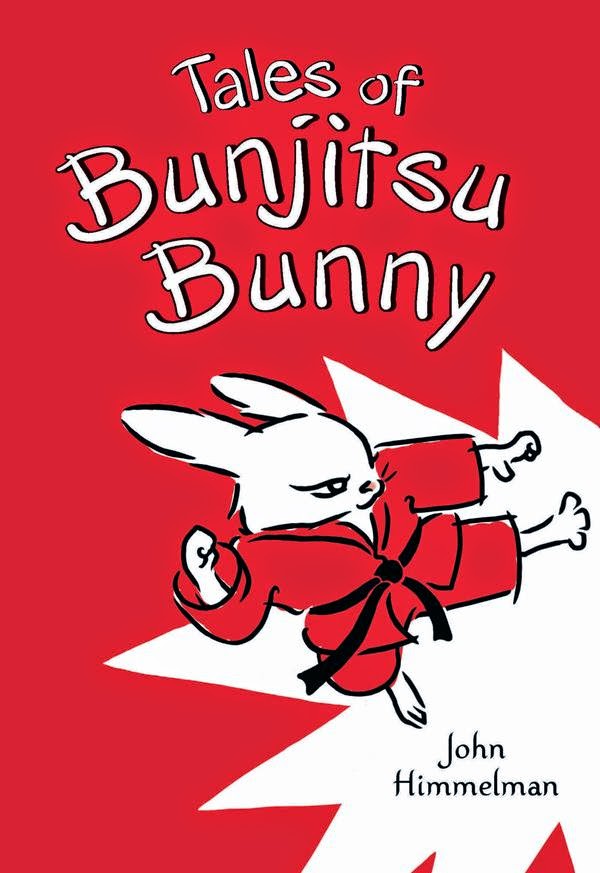
This Librarian's Quick Picks: Tales of Bunjitzu Bunny

Tales of Bunjitzu Bunny by John Himmelman book cover Tales of Bunjitzu Bunny
by John Himmelman
Henry Holt & Company (October 18, 2014)
Beginning Chapter Book

Summary:

Although she can throw farther, kick higher, and hit harder than anyone else at school, Isabel, aka Bunjitsu Bunny, never hurts another creature, unless she has to.

Why You'll Love It:
  •  With a female protagonist and a boy-friendly subject, this book will have a wide appeal for the early chapter book audience.
  • The spare illustrations support the text but leave much to the imagination of the reader.
  • Each chapter contains a moral or lesson disguised in an entertaining package that's easy to take in.
Who Should Read It:

Great for 1st-3rd graders.


What Else You Should Read:

Related Posts Plugin for WordPress, Blogger...
 
↑